Lauren Deans
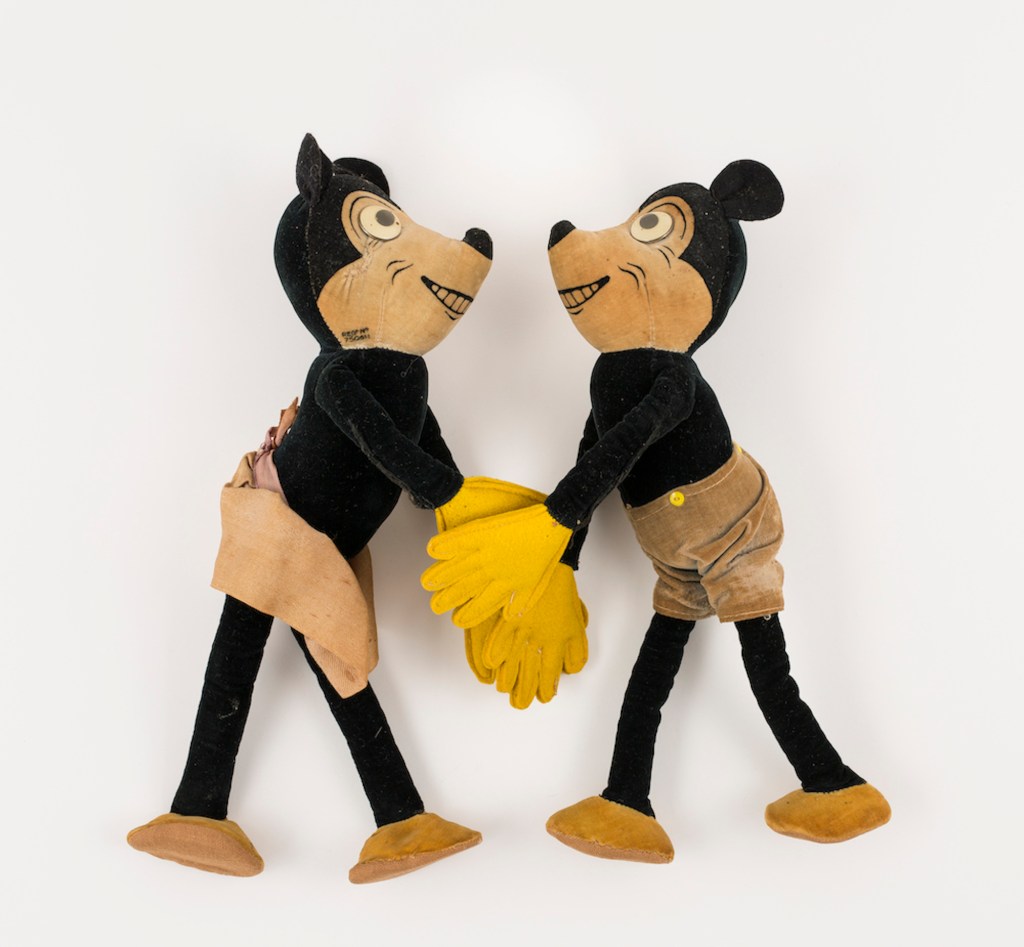
Though they look slightly different from the well-known cartoonish Mickey and Minnie we know today, remnants remain of these iconic mice. From the little round ears and black bodies to the oversized gloves, yellow shoes, and Mickey’s shorts with the little buttons, we can still distinguish that these aren’t just any old mice.
The soft velveteen toys were smaller than I expected and far more delicate, as though they could disintegrate without proper handling. But this is what happens when a beloved toy is worn with age and play, seen through the faded colours and the rubber tails, which now come separately in a little plastic bag.
The Donors
Gerald and Henrietta Caccia-Birch donated the Mickey and Minnie Mouse dolls belonging to Gerald’s parents Maud (née Keiller) and William Caccia-Birch in 1978. They are a notable Palmerston North family linked with the historic Caccia Birch House. Maud and William bought the home, which was then referred to as ‘Woodhey’, in 1921 after retiring from farming. They lived there until William died in 1936.1 Unable to sell ‘Woodhey’, the house was given to the Crown in 1940 and it was used by the military during World War Two. It is now a historic venue with a variety of uses. It was named after the family and is known as Caccia Birch House.2
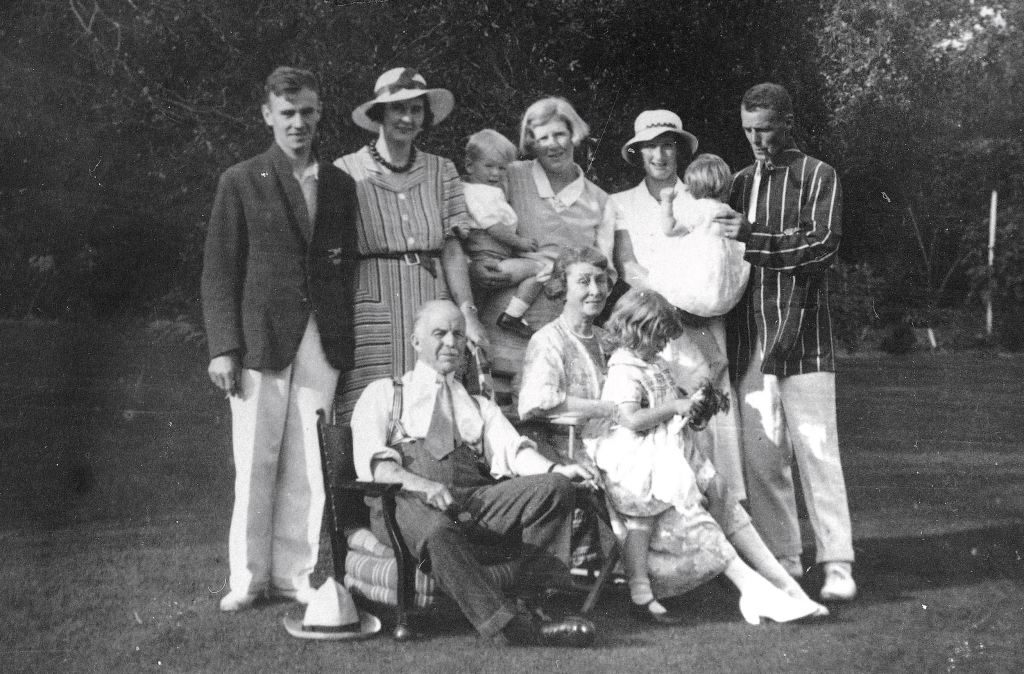
After William died, Maud commissioned the building of Guernsey Lodge in Marton where the iconic mice would live. Maud moved into the new house in 1937 and lived there until her death. The house was the largest home in Marton at the time it was built, and the design of the grounds was based on those of Caccia Birch house. The children of the donors recall seeing these dolls at Guernsey Lodge where Mickey and Minnie’s hands were connected hanging from a pole behind a tapestry fire screen.
Dean’s Rag Book Company
These Mickey and Minnie Mouse dolls were created by the Dean’s Rag Book Company. The business was originally a children’s book publishing firm founded in London in 1800 by Thomas Dean, called Dean & Son.3 They were a leading company in the development of interactive and pop-up books and were a highly established printing firm in Britain during the 19th century.4
But how do we get from children’s books to toys? The company was passed down through the male line, and in 1903 Henry Samuel Dean, Thomas Dean’s great grandson, founded Dean’s Rag Book Company upon discovering a way to make books relatively indestructible by using cloth sheets instead of the usual paper.5 This introduced an entirely new market of books for very young children as any mess could easily be wiped away. It also paved the way for the company to begin producing plush toys including the first production of teddy bears in 1915.6
However, they weren’t originally the main product of Dean’s Rag Book Company. The cloth books remained their central item until the 1920s when the bears gradually became the main product in their business with large-scale production.7 With their success in the bear-making business, they went on to create a large catalogue of toys including soft toys, dolls, and games, among other items. Some were even designed after famous characters, as we see in our Mickey and Minnie Mouse dolls.8
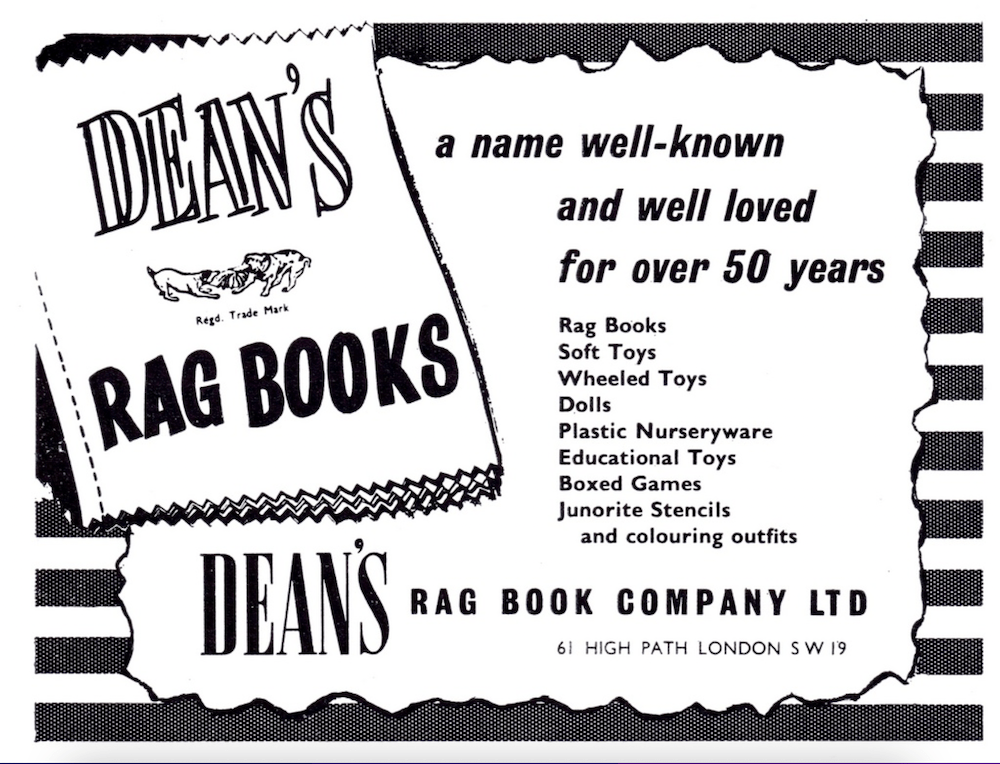
This business was controlled by Dean & Son until 1952 when they became an entirely separate company, one focusing on publishing and the other on toy making.9 The Rag Book Company slowed production of bears during World War Two, as most companies did, but production did revive during the 1960s and 1970s. However, the company was taken over by Plaintalk in 1986 and shortly after filed for bankruptcy.10 Though it was purchased by two ex-managers of the Plaintalk company in 1988, the company no longer makes bears and instead focuses solely on the collector’s market.11
Global Mice
The production of the Dean’s Rag Book Mickey and Minnie Mouse dolls was a result of Walt Disney’s animated short film ‘Steamboat Willie,’ created in 1928. The film depicts Mickey Mouse and his adventures while working on a steamboat. In this short, first glimpses of the characters in Mickey’s gang we famously know today appear such as the antagonist Pete and of course Mickey’s girlfriend, Minnie Mouse. Together they liven up the screen with an array of musically related misadventures, which are both hilarious and deeply disturbing.
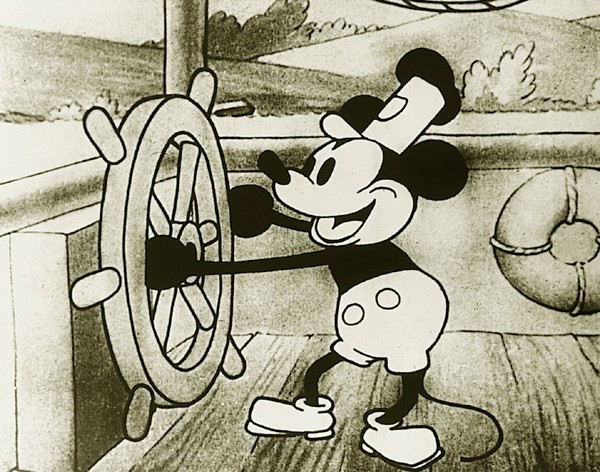
It was a revolutionary film in regards to technology at the time, where in an animated form, both music and visuals synced together. Though only eight minutes long it left a profound impact on animation and audiences, who were going in droves to the theatre to watch the film on the projector.12 Disney capitalised on this popularity, and there soon came a plethora of Mickey-related adventures and the domination of the animation industry for decades as a result. Not to mention the eventual mass production of Mickey memorabilia, an example of which I am writing about here.
Dean’s Rag Book Company were one of the earliest toy makers to produce a Mickey and Minnie Mouse doll in the 1930s.13 However, there is no specific date of creation of the Mickey and Minnie dolls held at Te Manawa. Usually, the Dean’s bears have a yellow label attached with a date. We know they are one of the oldest because with some deduction, we found a registration number on Minnie Mouse’s neck (Mickey doesn’t have one) 750611. This is a British registration mark used to identify British patent products, this number aligning with the years 1929–1930, however, the same pattern may have been used for a few years after, meaning that the toy had to have been created sometime in the 1930s, possibly between 1931 and 1933. This end date is used because by 1933 Mickey had slightly changed from the ones we see in Te Manawa’s collection, which resemble the Steamboat Willie version more. The change meant they became a fuller, more three-dimensional shape, which is more the Mickey we know today.14
This very small mouse meant a great deal to many people at the time: the great depression was ongoing, and so this form of escapism was much needed. As a result of various toy makers across the United States and the United Kingdom, many children had some form of Mickey memorabilia, almost seeking to take a piece of the beloved film home with them. For example, Queen Elizabeth’s own set of childhood Mickey and Minnie Mouse dolls, also created by the Dean’s Rag Book Company but dressed as a bride and groom, were put up for sale by English auction house Burstow and Hewett in 2017.15 It is not surprising that a rural family in New Zealand and the Queen of England would own the same Mickey and Minnie Mouse doll. It is the sheer magnitude of Mickey Mouse’s influence, that two completely different groups of people would all share in the same joy of owning a Mickey Mouse doll.
These toys also represent the globalisation of New Zealand where an expanding range of cultural influences such as American cartoon characters for children would begin to predominate. Slowly but surely Mickey Mouse and other Disney characters would become more available to children in New Zealand, not to mention the entire world, so much so that multiple generations of families would recognise Mickey Mouse in some form or another.
Therefore, linking back to what I said at the beginning, although the Mickey and Minnie dolls donated to Te Manawa look slightly different from their more well-known cartoon version, remnants remain of these iconic mice. You only have to recognise one small aspect of the doll, his ears, his body, his gloves, to know that it is Mickey. It is because these characters have been such a massive part of growing up, that almost every child, teen, adult and elder will recognise Mickey Mouse even in such a faded well-loved form. For me, it is the Mickey and Minnie in Mickey Mouse Clubhouse created in 2006, while for Maud Caccia-Birch it was Steamboat Willie. Regardless of the different models, we would both instinctively know a Mickey Mouse toy.
Footnotes
- Palmerston North City Council (PNCC), ‘Caccia Birch House’. ↩︎
- PNCC, ‘Caccia Birch House’. ↩︎
- Vintage Pop Up Books, ‘Dean & Son Publishers’. ↩︎
- Vintage Pop Up Books, ‘Dean & Son Publishers’. ↩︎
- Grace’s Guide to British Industrial History, ‘Dean’s Rag Book Co’. ↩︎
- The Brighton Toy and Model Index, ‘Dean’s Rag Book Company. ↩︎
- The Brighton Toy and Model Index, ‘Dean’s Rag Book Company’. ↩︎
- The Brighton Toy and Model Index, ‘Dean’s Rag Book Company’. ↩︎
- Vintage Pop Up Books, ‘Dean & Son Publishers’. ↩︎
- Suffolk, ‘Teddy Bear Focus’. ↩︎
- Suffolk, ‘Teddy Bear Focus’. ↩︎
- Burke, ‘Steamboat Willie’. ↩︎
- Lyons, ‘The Mouse that Clark Built’; Thornton, ‘RARE Vintage 1930s Deans Miniature Rag Doll MICKEY MOUSE’. ↩︎
- Malmberg, ‘Mickey’. ↩︎
- Burstow and Hewett Auctioneers, ‘Princess Elizabeth’s Baby Clothes Appear at Auction’. ↩︎
Bibliography
Burke, Myles, ‘Steamboat Willie: How Mickey Mouse’s first appearance saved Walt Disney from ruin and changed cinema forever’, BBC, 3 January 2024, URL: https://www.bbc.com/culture/article/20231117-steamboat-willie-how-walt-disney-came-back-from-ruin (accessed 31 March 2025).
Burstow and Hewett Auctioneers, ‘Princess Elizabeth’s Baby Clothes Appear at Auction’, 2017, URL: https://www.youtube.com/watch?v=uaFhIonGhF0 (accessed 31 March 2025).
Grace’s Guide to British Industrial History, ‘Dean’s Rag Book Co’, 25 May 2024, URL: https://www.gracesguide.co.uk/Dean%27s_Rag_Book_Co (accessed 31 March 2025).
Lyons, Mike, ‘The Mouse that Clark Built’, Antiques & Collecting Magazine, December 1995, [n.p.].
Malmberg, Jeff, ‘Mickey: The Story of a Mouse’, Disney, 2022, URL: https://www.imdb.com/title/tt11178402/ (accessed 31 March 2025).
Palmerston North City Council, ‘Caccia Birch House’, URL: https://www.pncc.govt.nz/Community/Venues-for-hire/Caccia-Birch-House (accessed 31 March 2025).
Suffolk, Nick, ‘Teddy Bear Focus – Dean’s Rag Book Company’, Hampshire Cultural Trust, 23 March 2022, URL: https://www.cultureoncall.com/teddy-bear-focus-3/ (accessed 31 March 2025).
The Brighton Toy and Model Index, ‘Dean’s Rag Book Company’, 2022, URL: https://www.brightontoymuseum.co.uk/index/Category:Dean%27s_Rag_Book_Company (accessed 31 March 2025).
Thornton, Valerie, ‘RARE Vintage 1930s Deans Miniature Rag Doll MICKEY MOUSE’, Iconic Edinburgh, 20 March 2025, URL: https://www.iconicedinburgh.co.uk/products/copy-of-rare-vintage-1930s-deans-miniature-rag-doll-mickey-mouse-good-condition-commensurate-with-age? (accessed 31 March 2025).
Vintage Pop Up Books, ‘Dean & Son Publishers – A Short History’, 2013, updated 19 February 2025, URL: https://www.vintagepopupbooks.com/Dean-Son-Publishers-History-s/1853.htm (accessed 31 March 2025).
Volley, Amanda, ‘Rags to riches – history of the Dean’s Rag books, dolls and bears’, Jolly Volley Vintage, 17 May 2018, URL: https://jollyvolley.co.uk/no-just-a-load-old-rags-history-of-the-dean-rag-books-and-dolls/ (accessed 31 March 2025).
 Te Manawa Museum Society
Leave a comment