Margaret Tennant and Lisa Cherrington

The Wahakura in Te Manawa: Two Perspectives

The Revival of Wahakura
For centuries and in many cultures baskets have been woven for small babies to sleep in. They enabled adults to keep infants near, whether moving around or, more importantly, while sleeping close.
The Māori term for such baskets or bassinets was wahakura. Woven from harakeke (flax), wahakura experienced a revival in the 2000s following concerns about Sudden Infant Death Syndrome (SIDS), now referred to as Sudden Unexpected Death in Infancy (SUDI). Māori babies were disproportionately represented in the fatality statistics.
In 2006 Dr David Tipene-Leach started the Safe Sleep programme, which not only alerted whanau to the clinical aspects of safe sleeping practices, but actively promoted the use of wahakura. These supported cultural practices of keeping infants with their parents in bed within the protected space provided by the woven vessel, thereby reducing the likelihood of overlaying. The close proximity of mother and baby in bed was also seen to facilitate breastfeeding. Such was the demand for the sleeping baskets that plastic pepi pods were also produced.
Thousands were distributed to young parents throughout Aotearoa New Zealand, and within ten years of the launch of the programme it was claimed that death rates from SUDI had dropped by 30 per cent.1
However, the programme had another positive effect for whānau, especially where they became involved in the actual production of the wahakura and the local knowledge systems surrounding them. The sourcing of the flax and the weaving of the baskets was seen as ‘connecting people to a matrix of well-being and whakapapa’, emphasising the importance of the land and the plants growing on it. For many it was a process of empowerment, helping mothers negotiate health systems that had all too often been alienating to Māori women.2 Wahakura were markers of identity, helping whanau to link with te ao Māori.3
The Wahakura in Te Manawa
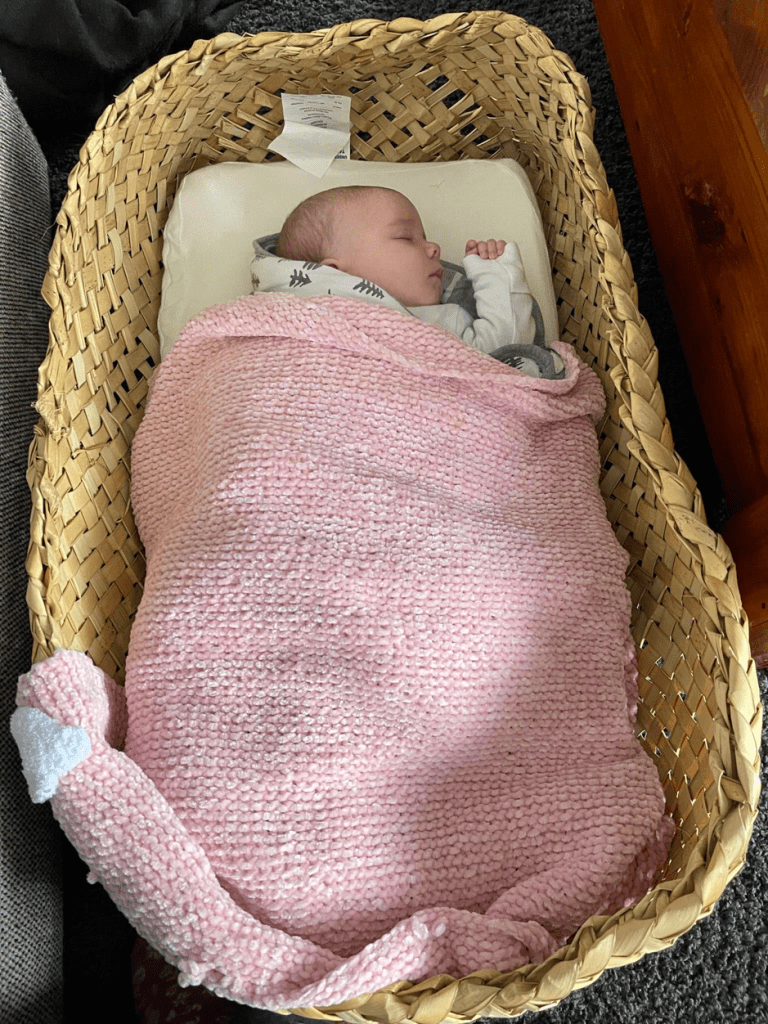
Te Manawa’s wahakura, woven by Lisa Cherrington (Ngā Puhi and Ngāti Hine) and donated by Vaughan Slinn and Tara O’Brien, came from this context. It is approximately 78 cm long, 41 cm wide and 19 cm in depth. It was woven over 29–30 June 2019 at a wānanga led by Ngareta Paewai at Makirikiri Marae, Dannevirke.
Its story is both deeply personal and representative of wider trends.
Ian Matheson’s history of Palmerston North notes a dramatic increase in the Māori population of the city recorded in the census between 1945 and 1976. In 1945 there were 203 and by 1975, 4564 residents who identified as being ‘of Māori descent’ (7.1 per cent of the total population). A wider urbanisation of the Māori population was taking place and most of the newcomers to Palmerston North came from beyond the Rangitāne rohe, from areas such as the East Coast of the North Island, Whanganui and Taranaki.4
Among the arrivals were one year old Lisa Cherrington, her Pākeha mother Suzanne Olsson, her father Paki Cherrington (Ngā Puhi, Ngāti Hine), and her two brothers, James and Dale. The family came from Tūrangi, and Paki was to teach for a while at Palmerston North Boys’ High School and Queen Elizabeth College, but eventually became better known as an actor and social worker. Between them, the couple developed a wide range of local connections, and Su was to become a lecturer at Massey University.5
After the marriage ended, Su remarried and Lisa’s Pākehā brother Vaughan Slinn was born. It was for the children of Vaughan and his partner Tara that Lisa made the wahakura in 2019.
The wahakura represents, through this back-story, kinship in the late twentieth-century, where marriage and re-marriage made family relations among Māori and Pākehā more complex than simple binary narratives assume. Lisa gifted Māori names to Vaughan and Tara’s children: first, Bodi Manawa and later, when his baby sister was born during the Matariki period, Esca Harper Hiwa-i-te-Rangi. Lisa saw this gesture as a koha which ensured the children would always have a connection to te ao Māori through her, even though there wasn’t a biological connection.
The wahakura also symbolises the dual attachment of many Māori residents to Palmerston North as the place where they grew up, as well as to their ancestral homes, and Lisa wrote about this in her mihi to the wahakura. The harakeke for the wahakura was gathered from the banks of the Manawatū on the southern side of the awa near He Ara Kotahi. The wānanga at which Lisa and the associated group learned to strip down the flax, cut the pieces to size and then weave it into baskets took place at the Rangitāne Makirikiri Marae at Dannevirke. Lisa was helped by her sons Awatea and Kohae.

Once it was woven, there was a proper process followed of drying the wahakura and then placing in it a mattress, sheets and blanket for the baby: as Lisa explained, ‘It wasn’t as if you just make it and take it and run!’ There was a ceremonial handing over of the wahakura to their makers on 23 August 2019.

And when baby Bodi Manawa was born on 4 September 2019 his Whaea Lisa one of the first to see him after the birth, and he was soon after placed into the protective embrace of the wahakura.

The wahakura was also used for Esca Harper Hiwa-i-te-Rangi after her birth in 2022.
Margaret Tennant (wife of Lisa’s stepfather Warwick, ‘Grandma’ (non-biological) of Bodi and Esca, and another example of the intricacies of extended and rewoven family relations in the 21st century!)
E te Wahakura (a mihi)
Nā Lisa Cherrington
Kei te mihi ki a koe e te Wahakura. You were weaved by my own hands, alongside my two boys Awatea and Kohae. You were weaved at a wahakura wānanga for hapū mama at the Mākirikiri Marae in Dannevirke. But, I wasn’t hapū. Those days were long gone. But I made you for my whanau. For the unborn pepi hou in my sister-in-law’s puku. My English sister in law, Tara and my Pākehā brother, Vaughan. Two very special people in my life and in the lives of my two sons. I wanted to gift this pepi and them, something meaningful from my world. From my te ao Maori that is my korowai. My cloak. I wanted them to have a part of this cloak. And so when I saw there was a wahakura wānanga being held in Dannevirke, I contacted Ngareta who was in charge of organising it. And we became a part of the wānanga.
First task, was finding the harakeke and preparing it. It had been a long time since I had last weaved and I did not have a patch or a supplier so to speak. But Ngareta, knowing that I had lived in the Palmerston North rohe for a long time, suggested a patch alongside the Manawatū riverside. And so that is where we went. Karakia said, and her and I cut the harakeke. She told me how many pieces I would need for the wahakura. And together we worked and tied them in bundles. And I was ready. I was ready to begin the process of bringing you together. It would be my sons’ job to wipe down the harakeke in preparation for the wānanga. And on Friday 28th June, 2019, off we all went (me and my sons), along with you (yet to be weaved) to the pohiri and wānanga in Dannevirke.
Ko taku tapu ki runga o maunga o Parakiore
Ko taku mana e rere ana i te awa o Taumarere me Maruarua
Ko taku mauri e noho tuturi ki Ngāti Hine me Ngāti Kakahu o Torongare
Ko wai te tangata e mohio ana nei?
Tihei Mauriora! Ko Lisa Cherrington ahau.
My sacredness rests within the mountain of Parakiore
My mana flows in the rivers of Taumarere and Maruarua
My life essence resides with Ngāti Hine and Ngāti Kakahu o Torongare
Who is this person that speaks?
Behold the breath of life, I am Lisa Cherrington.
Born in Tūrangi to Su Olsson and Paki Cherrington, we moved to Palmerston North when I was 1 year old. I attended Awapuni Primary School. After my parents divorced at age 6, I attended Hokowhitu School, Intermediate Normal, Awatapu College and then off to Massey University where I eventually became one of the few Māori clinical psychologists in New Zealand at the time.
Whilst at Intermediate Normal, my youngest brother, Vaughan Richard Olsson Slinn was born. I remember when we would be out and about as a family (my Mum, step-father, Warwick Slinn and Vaughan) and people would ask who was this baby? They would look at me strangely when I would tell them he was my brother. It was my father Paki who reminded me that ‘blood is blood’ and that ‘we don’t talk in halves.’ I never called him my half brother. He has never been to my marae up North. He has never been to the urupa where my father, Paki lies. Sometimes I think this is strange because my baby brother is such an important part of my life.
But we were there together when our mother, Su Olsson died. In an ICU in Christchurch, we sat together on each side of her. After she had battled 6 long weeks overseas in an ICU in Hawaii, all she wanted to do was get home. When she did get home, she passed away and my brother and I were there when she took her last breath. Alongside my 9 month old son, Awatea. We have shared that grief and that memory together.
And so my baby brother, for the birth of his first child, did not have our Mum present. But I was there (well not in the room, I wasn’t allowed … lol) but once little Bodi Manawa had come into the world, I was the first whanau (apart from his parents of course) to be there. I had planned to sing an oriori for him, but I could only remember some of the words in that moment, ‘Nau mai e tama.’ I was gifted the honour of being able to choose Bodi’s middle name. I chose Manawa because of the connection to the Manawatū. I wrote in his card, about how the name Manawatū came to be. The chief seeing the mighty Manawatū river, his heart standing to attention. I chose Manawa because of the many layers of meaning it has for me.
And when Bodi Manawa returned home, you, e te wahakura, were there waiting for him. Along with the blankets and mattresses gifted to the wānanga for all of the other completed wahakura. And this is where he slept in the beginning of his days in te ao Marama. With you. Weaved with much love and the memories of people gone past to hold this taonga of the present and future. You have a mauri, an essence that comes from the atua that created the harakeke right through to the hands that cut and prepared you, to the mātauranga that was shared by the weavers in how to create you, right through to the hands that weaved you. And now you hold him, our Bodi Manawa.
Kei te mihi ki a koe e te wahakura.
Much aroha, Lisa
Lisa Cherrington
Footnotes
- Te Ao Māori News, 14 June 2016. ↩︎
- Ngā Whenu o Te Wahakura, p. 3. ↩︎
- Ngā Whenu o Te Wahakura, p. 7. ↩︎
- Matheson, Council and Community, p. 41. ↩︎
- Information in this and following paragraphs from personal communication, Lisa Cherrington to Margaret Tennant, 30 March 2024. ↩︎
Bibliography
Matheson, Ian, Council and Community: 125 Years of Local Government in Palmerston North 1877-2002, Palmerston North City Library, 2003.
National SUDI Prevention Coordination Service, Hāpai Te Hauora, Ngā Whenu o Te Wahakura The Many Strands of Wahakura, 2019, https://sudinationalcoordination.co.nz/sites/default/files/Nga%20Whenu%20Book%20PRINT.pdf, accessed 15 November 2025.
 Te Manawa Museum Society
Leave a comment