Simon Johnson
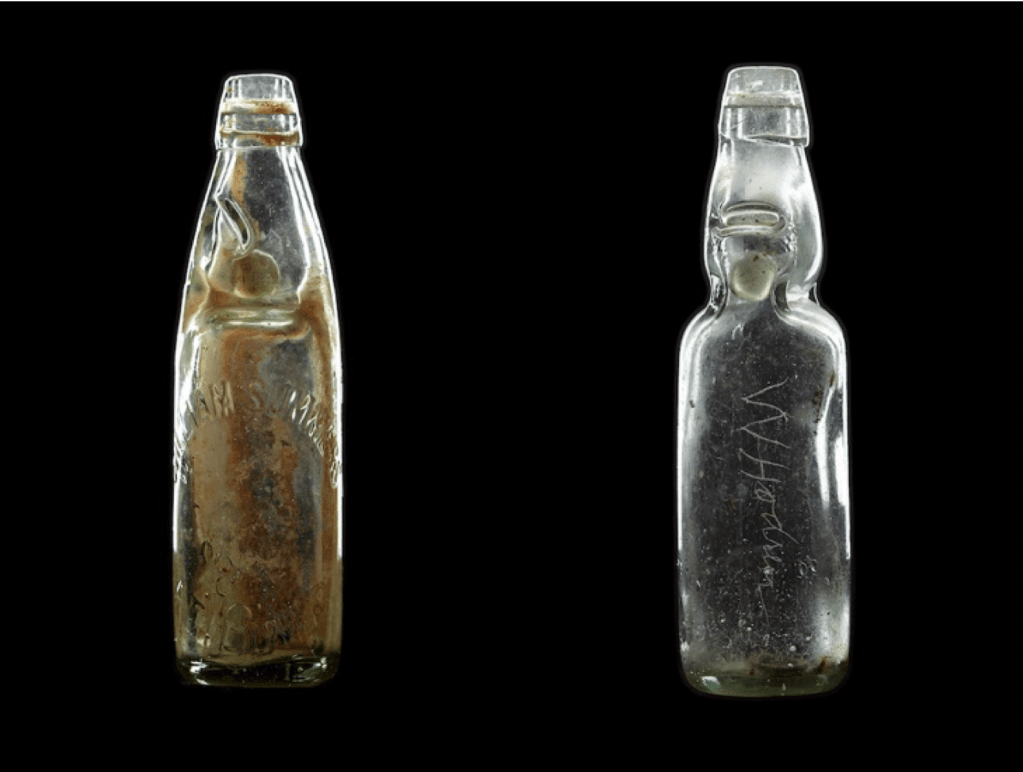
Two Codd-neck, self-sealing soda bottles were donated to Te Manawa Museum by Toni Edmeades in 2019 in memory of her maternal great-uncle Colin Tapplin (1921–2008), a farmer at Kiwitea. The first is stamped for W. Summers, Feilding, and the second has ‘W Hodren’ scratched on the side. They can be dated to around the 1880s. William Summers and Walter Hodren were both businessmen who came to Feilding with prior experience of the aerated water (fizzy drink) and cordial industry.
William Summers was born in Wiltshire, England, in 1856. Before emmigrating to New Zealand he had spent several years working at Smart’s Cordial Factory in Chippenham. The Cyclopedia of New Zealand describes him setting up an aerated water and cordial factory in Feilding in 1878 – which as we will see may be dubious – with his business partner and future brother-in-law Joseph Mayhew.1 The factory was located in Gladstone Street and used water from a nearby spring.2
In 1884, Mayhew and Summers married sisters Mary Louisa Dowden and Sarah Jane Dowden, at St Mark’s Church, Halcombe, and St John’s Church, Feilding, respectively.3 These marriages were short-lived. Joseph Mayhew died intestate in August 1885 after a fall from his horse.4 Two months later, 20-year-old Sarah Summers died five days after giving birth to her first child.5
Summers continued as sole proprietor, although he advertised as Summers & Mayhew until 1887.6 By the mid-1890s he was powering his aeration and bottling machinery with a kerosene-fueled steam engine. The factory employed two men, with extra help being hired in the summer season. Daily production was up to six hundred dozen bottles per day, which were then sold throughout Manawatū.7 He also installed ice-making equipment, a useful adjunct to the soft drink business.
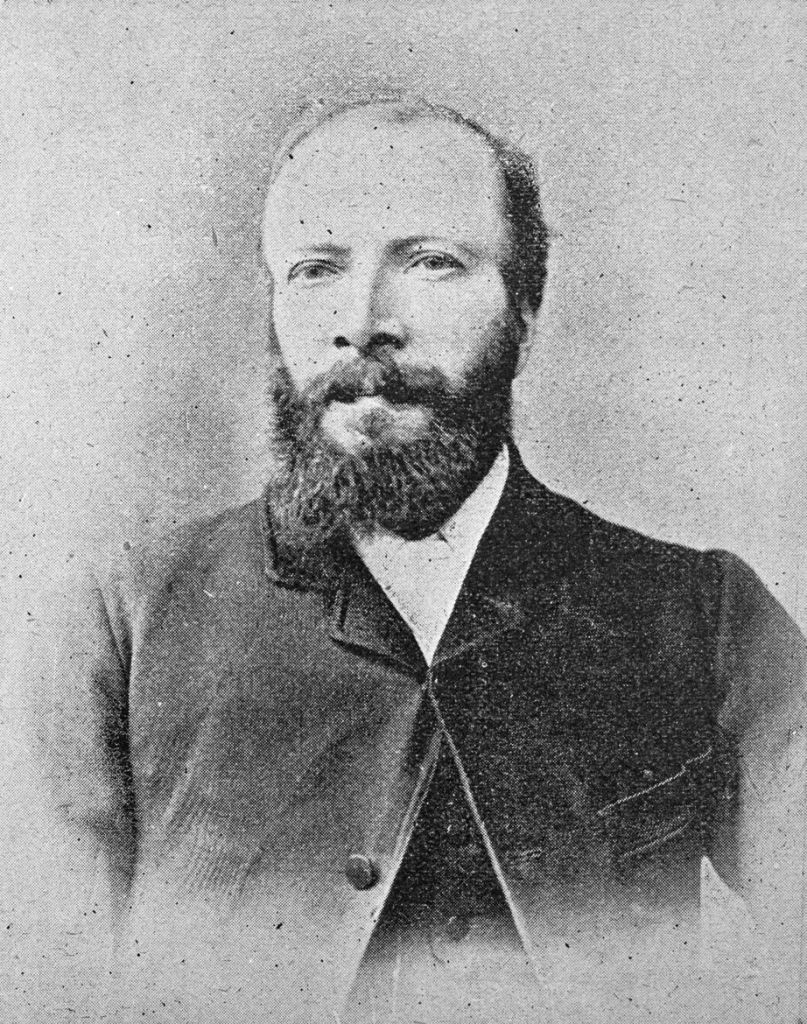
In 1904, Summers sold the factory to a T.A. Askew of Christchurch, and is described by the Feilding Star on his departure for Auckland as ‘leav[ing] behind him a host of friends’.8 The Gladstone Street site had various owners over the next fifty years, but remained a soft drink factory until 1963.
Walter Hodren’s trajectory as a local cordial manufacturer was different to that of William Summers. Like Summers, he had previous experience in the cordial and aerated water business, in his case through working in his father’s factory in Whanganui for a decade.9 In 1892, Edwin Hodren helped his son set up the Standard Steam Aerated Water Works in Queen Street, Feilding.10
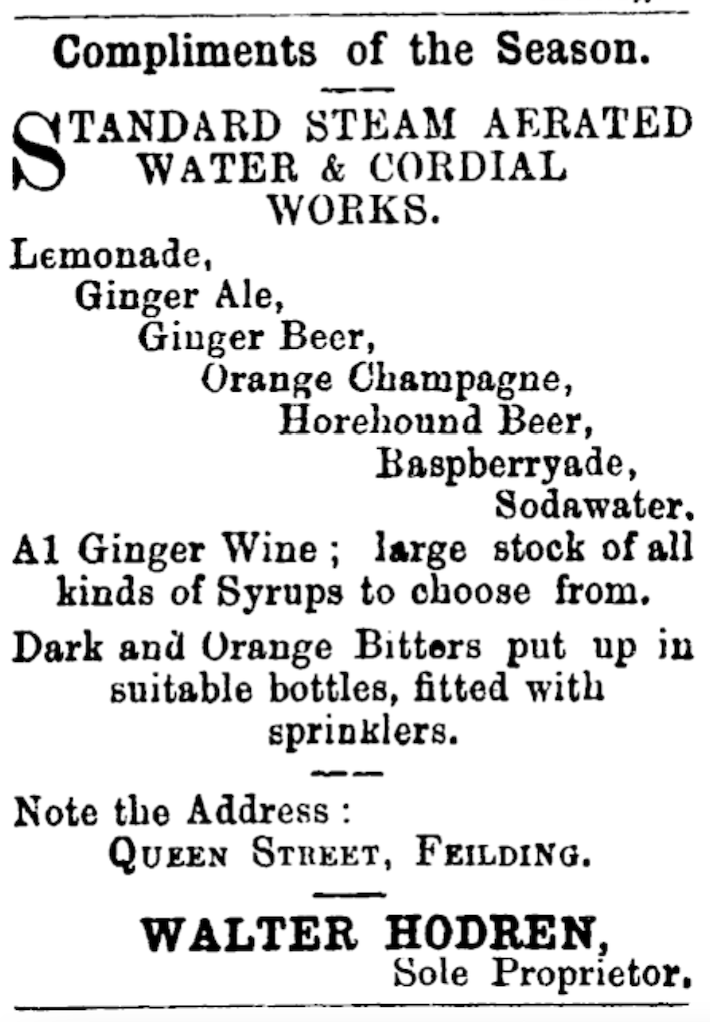
Walter Hodren sold the business five years later to William Summers’ brother-in-law George Dowden.11 He became a publican at the Railway Hotel in Fordell, near Whanganui, where soon after he was convicted of allowing drunkeness at the hotel.12 He soon took over his father’s cordial factory in Whanganui, but fourteen months later a notice in the Wanganui Chronicle has him selling up and leaving.13
Walter Hodren moved to Palmerston North with his wife Amy Ellen Hodren (née Corney) and their large family. Over the next ten years the Manawatu Times recorded a series of misfortunes in their family life. One of their children died at the age of eleven in 1905.14 Hodren’s financial relationships with his family were mired in conflict.15 In April 1912 he was sued by his wife for £20 10s.16 In August the same year he committed suicide by drinking Lysol disinfectant. The coroner’s inquiry described him as a 47-year-old cabinet maker who had suffered from ‘nervous breakdowns’.17 A fine headstone in Terrace End Cemetery pays tribute to a ‘beloved husband’ who was ‘at rest’.18
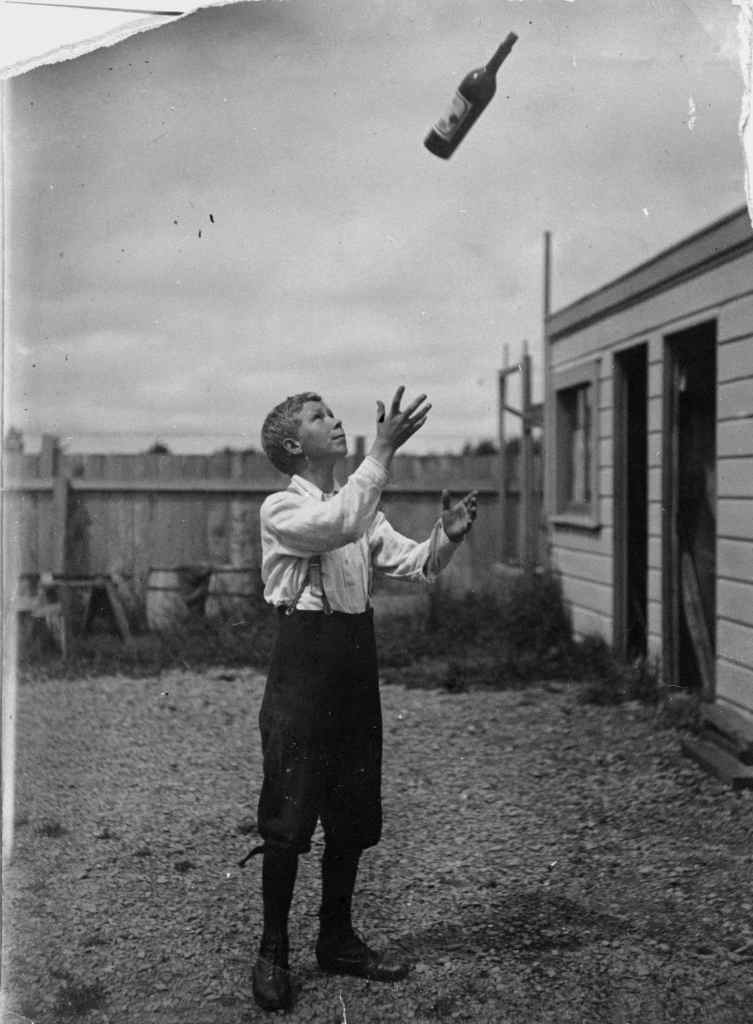
Both bottles held by Te Manawa are of the Codd self-sealing type. These bottles, which were sealed by an internal valve consisting of a glass marble, were invented by Yorkshire engineer Hiram Codd and patented in 1872.19 Bottles were the nineteenth century cordial maker’s biggest expense. There was no glass bottle making industry in Aotearoa New Zealand until the twentieth century and most were imported from the United Kingdom.20 Codd bottles were expensive to produce, consisting of three parts – the vessel, the pinched neck, which included a small chamber for the marble, and the marble itself, which sealed the neck from the inside under the pressure of the carbonated drink. Bottles were intended to be reused indefinitely. Most were probably returned by the shops and bars selling the drinks. Cordial makers would periodically advertise in newspapers for ‘any bottles’ and caution against breaking them, which children often did for the marble.21
Many makers bought bottles which already had their company name impressed in the glass, as seen on the William Summers’ bottle. Blank bottles might be commandeered by a maker scratching his name on the glass as in the Hodren example, although this was not consistent with his father Edwin’s approach.22 By the early twentieth century these expensive bottles along with the wired cork varieties were eclipsed by the familiar metal crown cap in use today.
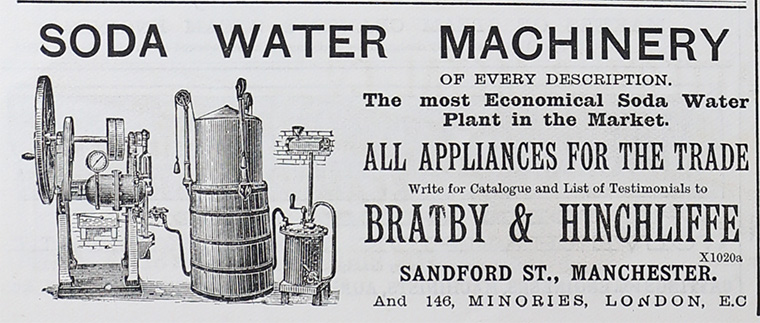
Fizzy drinks were made by generating carbon dioxide and compressing it into spring water. Early water aerating machines were hand-powered. In the image above the handwheel can be seen on the left. This stage of the process both created carbon dioxide and compressed it into the water to create the ‘fizz’ in the drink. Flavouring syrups would then be added before the liquid was piped to the bottle filling machine, which was also manually operated.
Successful operators eventually installed steam engines to power their machinery. William Summers did this in 1891, both increasing production and eliminating the risk of Occupational Overuse Syndrome (OOS) in staff who cranked the compressor!23 Exploding bottles were in fact the greater hazard.24 Walter Hodren installed steam power from scratch the following year. He grandly named his factory The Standard Steam Aerated Water Works.
As already noted, The Cyclopedia of New Zealand tells us that William Summers set up his factory in 1878. This is difficult to imagine, given that Feilding was little more than a bush settlement at the time, and probably incorrect.
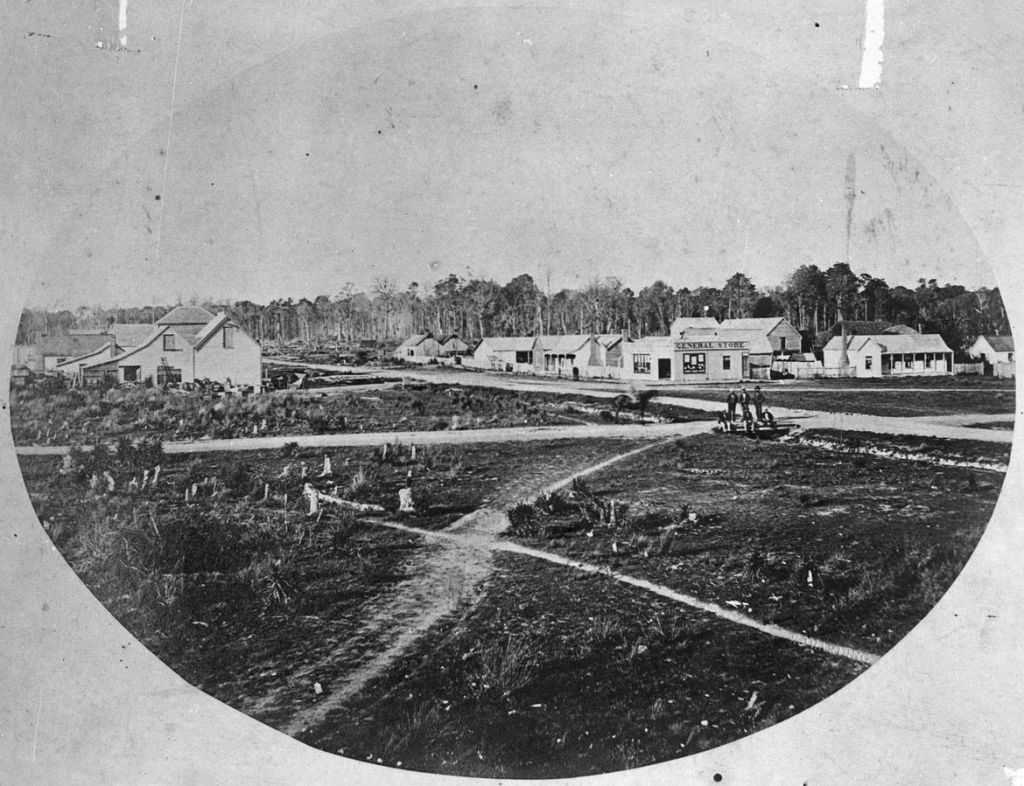
In the above photograph of Manchester Square, taken in about 1878, there is a general store and some houses. Virgin bush surrounds the fledgling town. It is easy to picture the kinds of businesses which would be attracted to such a settlement – those supplying essential foodstuffs, clothing, footwear, and basic hand tools such as spades and axes. Simple boarding houses would cater to travellers or anyone doing business in the township. Among the least likely early enterprises you would expect to find was a ‘fizzy drink’ factory. One reason for this was the lack of transport networks. Today it is more economical to make products in a large facility and distribute them nationally by road or rail. This was not possible for many late-nineteenth-century settlements.
In October 1882, the Feilding Star boasted that the new township already had “numerous sawmills, a carriage factory, fellmongery, flour mill, brewery and an aerated water factory’.25 William Summers was an undoubted owner of the latter. The Feilding Star announced the opening of the ‘Summers and Co.’ factory four months earlier:
They have imported a first-class plant, comprising all the latest mechanical improvements and modern appliances. The Aerated Waters will be manufactured from Filtered Spring Water, and only the best materials required for the trade will be used. A trial respectfully solicited. Hotels and families supplied with despatch.26
Most towns in Aotearoa New Zealand were no different. Virtually all had a local cordial factory until the mid-twentieth century. By this time, many had either amalgamated or been taken over by national, or even international, companies. This was a pattern common to other industries from brewing to clothing manufacturing.27
The steadiest market for non-alcoholic drinks throughout Aotearoa New Zealand was among temperance advocates. Today we might call the temperance and prohibition movements of the late nineteeenth and early twentieth centuries a ‘culture war’. It crossed political party lines, wielded great power, and lasted around a century. Women won the vote through the efforts of the New Zealand Women’s Christian Temperance Union, and temperance lobbyists forced through legislation which put national prohibition on the parliamentary election ballot in 1911. At the 1919 general election New Zealand almost went ‘dry’ by a margin of 2 per cent. It was also possible to vote for a liquor sale ban in one’s electorate. Twelve electorates went ‘dry’ between 1894 and 1908. Six o’clock closing for all bars was another win for the ‘wowsers’. For 50 years, from 1917 to 1967, all bars were obliged to close at six o’clock, supposedly to oblige drinking men to go home to their families.28
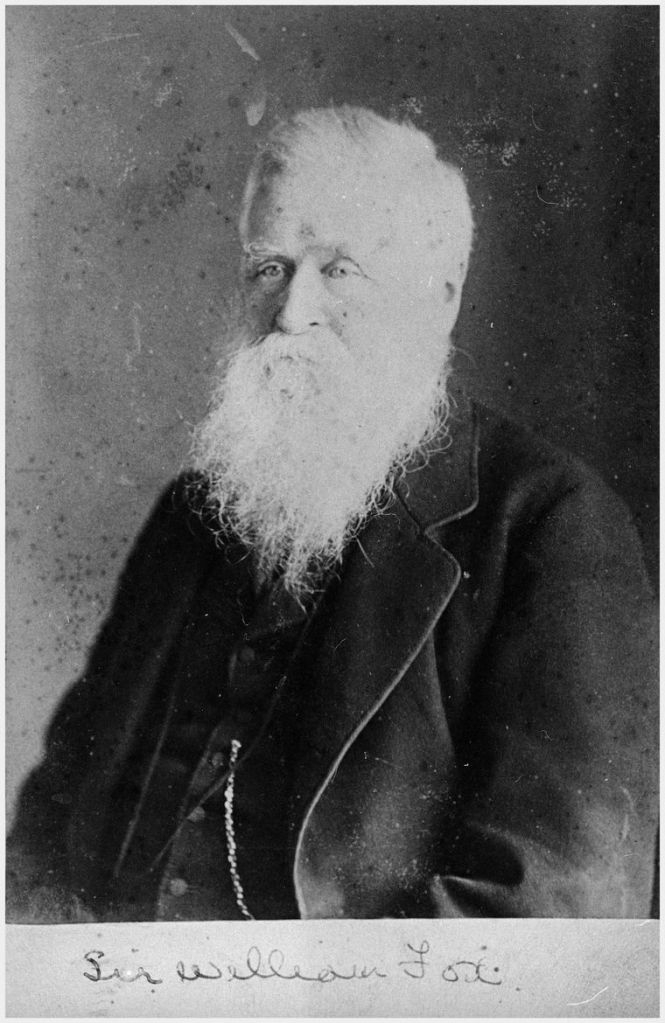
Worldwide, the temperance movement’s origins lay in Christian revivalism and a new industrialised world in which sober, committed men might hope to ‘get on’.29 The influence of these ideas in Feilding can be seen from the beginning of settlement. Temperance speakers were very common at public meetings, held either in the old Immigration Barracks or the Public Hall. These included travelling speakers and political grandees like Leonard Isitt. Veteran politician Sir William Fox frequently spoke against the granting of new liquor licences in Feilding.30
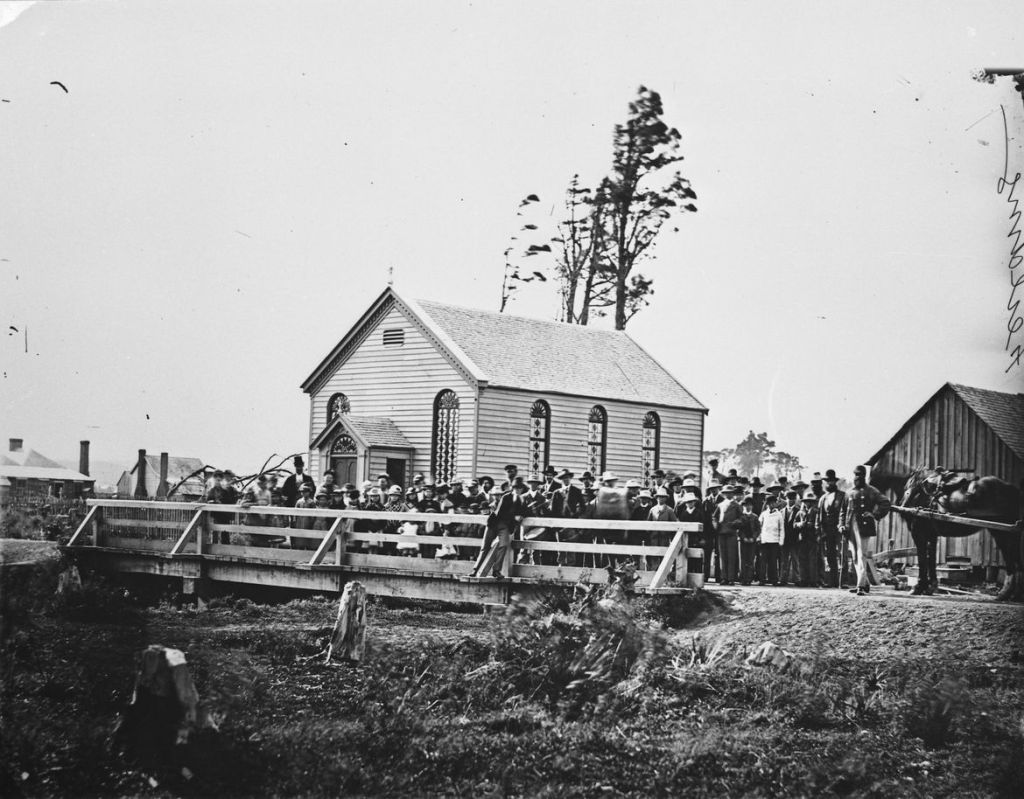
The first church building in Feilding was a Primitive Methodist chapel.31 Primitive Methodism was a ‘back to basics’ strand of the Wesleyan church which began in early nineteenth century England and had temperance as one of its key tenets. It appealed strongly to the small entrepreneurs, businessmen and workers of the kind who emmigrated to Aotearoa New Zealand to make new lives for themselves and their families. By 1880, all new settlements in Manawatū had Primitive Methodist chapels with growing congregations.
In the mid-1880s they were joined in their commitment to temperance by the Salvation Army. The Army was the ultimate revivalist, temperance church, depending on the theatre of personal testimony, vigourous singing and hellfire preaching to swell congregations. An 1885 Salvation Army event advertisment in the Feilding Star for Queen’s Birthday reads: ‘BLOOD AND FIRE. GREAT UNION OF FORCES And Special Engagements against the Powers of Darkness will be held in the Public Hall on MONDAY, MAY 25th.’32 Among the ‘Powers of Darkness’ for Salvationists were public bars and the liquor industry.
This social and religious mix ensured a ready market for what we call ‘soft drinks’, but which in the late nineteenth century were non-alcoholic, non-injurious or temperance drinks. In the early twentieth century, Coca-Cola was marketed in the United States as ‘The Great National Temperance Beverage’.33
In Aotearoa New Zealand it was no different. Fizzy drinks were aimed at paying adults rather than children, and included many flavours clearly intended as alcohol substitutes. We can still buy ginger ale and ginger beer. Nineteenth century cordial makers also sold Kola Beer, Winter Stout, Hop Ale (non-alcoholic), Herb Beer, Dandelion and Burdock, and Ginger Champagne. In 1893 William Summers introduced a ‘most palatable temperance drink called “Football Punch.”’34 Such drinks were sometimes marketed as ‘tonics’ to underline their difference from alcohol.35 By contrast, Walter Hodren’s football punch was ‘just the thing for the boys!’36
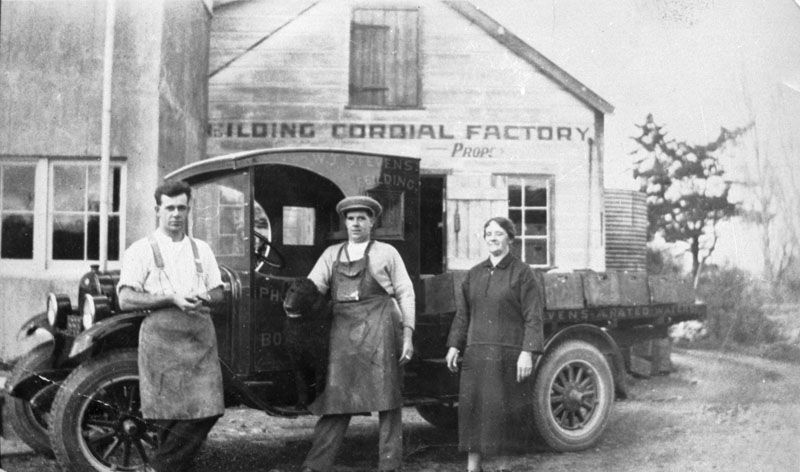
William Summers’ Gladstone Road factory had several owners throughout the first half of the twentieth century when local cordial firms were still fairly common. The last owner was Stevens Cordials, which closed in 1963. Walter Hodren’s Queen Street factory has vanished from the records.
Footnotes
- The Cyclopedia of New Zealand [Wellington Provincial District], Wellington, 1897, pp. 1236–37. In a December 1883 issue of the Feilding Star, Summers and Mayhew placed a notice that gave ‘thanks to the general public for the very liberal support accorded to us for the past four years’. It seems likely that this refers to their contributions as caterers at public events. See Feilding Star, 30 December 1882, p. 2; Feilding Star, 21 July 1883, p. 3; Feilding Star, 13 December 1883, p. 3. ↩︎
- Feilding Star, 18 October 1882, p. 4; Feilding Star, 31 May 1883, p. 2; Feilding Star, 7 September 1893, p. 1. ↩︎
- Feilding Star, 2 August 1884, p. 2; Feilding Star, 7 November 1884, p. 2. ↩︎
- Feilding Star, 20 August 1885, p. 2; Feilding Star, 22 August 1885, p. 2; Joseph James Mayhew, probate records, 1885, URL: https://collections.archives.govt.nz/en/web/arena/search#/entity/aims-archive/R8688741/mayhew%2C-joseph-james (accessed 6 April 2026). ↩︎
- Feilding Star, 6 October 1885, p. 2; Feilding Star, 10 October 1885, p. 2. ↩︎
- Feilding Star, 4 January 1887, p. 1; Feilding Star, 8 January 1887, p. 3. ↩︎
- Feilding Star, 28 November 1891, p. 2. ↩︎
- Feilding Star, 22 October 1904, p. 2. ↩︎
- Feilding Star, 24 September 1892, p. 3. ↩︎
- Feilding Star, 20 August 1892, p. 2; Feilding Star, 29 September 1892, p. 3; Wanganui Chronicle, 2 May 1894, p. 2. ↩︎
- Feilding Star, 21 January 1897, p. 3; Wanganui Chronicle, 11 June 1897, p. 2. ↩︎
- Wanganui Chronicle, 27 September 1897, p. 2; Feilding Star, 27 September 1897, p. 2; Wanganui Herald, 12 October 1897, p. 2; Wanganui Chronicle, 20 December 1897, p. 2. ↩︎
- Wanganui Herald, 13 June 1898, p. 2; Wanganui Chronicle, 17 November 1899, p. 2. ↩︎
- Manawatu Standard, 7 November 1905, p. 4. ↩︎
- Manawatu Standard, 29 September 1910, p. 1; Manawatu Standard, 4 October 1910, p. 1. ↩︎
- Manawatu Standard, 30 April 1912, p. 5. ↩︎
- Manawatu Standard, 20 August 1912, p. 5. ↩︎
- ‘Walter Hodren’, Palmerston North Cemetery Index, URL: https://www.pncc.govt.nz/Services/Cemetery-and-cremation-search ↩︎
- See Barnsley Glass Industry, https://www.yorkshirepost.co.uk/news/in-barnsley-where-theres-muck-theres-glass-1826103 (accessed 4 February 2026). ↩︎
- Woods, ‘Household Narratives from a Colonial Frontier’, p. 220. ↩︎
- Wanganui Herald, 12 November 1891, p. 3; ‘Aerated water bottle’, gift of the Guard family, 1993, Te Papa, GH005245, URL: https://collections.tepapa.govt.nz/object/524500 ↩︎
- Woods, ‘Household Narratives from a Colonial Frontier’, pp. 152, 420, 449. ↩︎
- Feilding Star, 28 November 1891, p. 2. ↩︎
- See for instance Wanganui Chronicle, 25 March 1879, p. 2; Manawatu Times, 26 April 1879, p. 2. ↩︎
- Feilding Star, 21 October 1882, p. 2. ↩︎
- Feilding Star, 17 June 1882, p. 4. ↩︎
- Robson, A History of the Aerated Water Industry in New Zealand, Appendix B. ↩︎
- Roberts, Nigel, ‘Referendums – Prohibition referendums’, Te Ara – the Encyclopedia of New Zealand, https://teara.govt.nz/en/referendums/page-2 (accessed 6 April 2026); Christoffel, ‘Liquor laws’, Te Ara – the Encyclopedia of New Zealand, https://teara.govt.nz/en/liquor-laws (accessed 4 February 2026). ↩︎
- Lineham, ‘Religious Beginnings in Palmerston North’, pp. 69–78. ↩︎
- Wanganui Chronicle, 10 December 1874, p. 2; Wanganui Herald, 12 December 1874, p. 2; Manawatu Times, 5 July 1879, p. 3. ↩︎
- Wanganui Chronicle, 7 July 1876, p. 2. ↩︎
- Feilding Star, 19 May 1885, p. 3. ↩︎
- The Coca-Cola Company, ‘History of Coca-Cola Advertising Slogans’, URL: https://www.coca-colacompany.com/about-us/history/history-of-coca-cola-advertising-slogans (accessed 4 February 2026). ↩︎
- Feilding Star, 6 June 1893, p. 2; Feilding Star, 29 July 1893, p. 1. ↩︎
- See for instance, Feilding Star, 15 December 1885, p. 3; Wanganui Herald, 9 December 1901, p. 3; Manawatu Times, 12 March 1918, p. 5. ↩︎
- Feilding Star, 3 June 1893, p. 2. ↩︎
Bibliography
Christoffel, Paul, ‘Liquor laws’, Te Ara – the Encyclopedia of New Zealand, URL: https://teara.govt.nz/en/liquor-laws (accessed 4 February 2026).
Lineham, Peter, ‘Religious Beginnings in Palmerston North: Part 2’, Manawatū Journal of History, no. 19, 2023, pp. 69–78.
Methodist Church, ‘My Primitive Methodists: Sharing Stories, Photos, Memories and Research’, URL: https://www.myprimitivemethodists.org.uk/content/subjects-2/primitive-methodist-history/what-is-primitive-methodism (accessed 4 February 2026).
Emmins, Colin, Soft Drinks: Their Origins and History, Shire Publications Ltd, 1991.
Roberts, Nigel, ‘Referendums – Prohibition referendums’, Te Ara – the Encyclopedia of New Zealand, https://teara.govt.nz/en/referendums/page-2 (accessed 6 April 2026).
Robson, E.W., A History of the Aerated Water Industry in New Zealand, 1845–1986, New Zealand Soft Drink Manufacturers Association, Auckland, 1995.
The Cyclopedia of New Zealand [Wellington Provincial District], Wellington, 1897, pp. 1236–37.
Woods, Naomi, ‘Household Narratives from a Colonial Frontier’, PhD thesis, University of Otago, 2017.
 Te Manawa Museum Society
Leave a comment