Louis Changuion
Drysdale Rug: Weaving the Story of the Drysdale Sheep
Among the many objects preserved in museum and archival collections are items that can easily be overlooked. They are not rare works of art, famous documents, or valuable antiques. Yet sometimes these everyday objects tell important stories about innovation, industry and community.
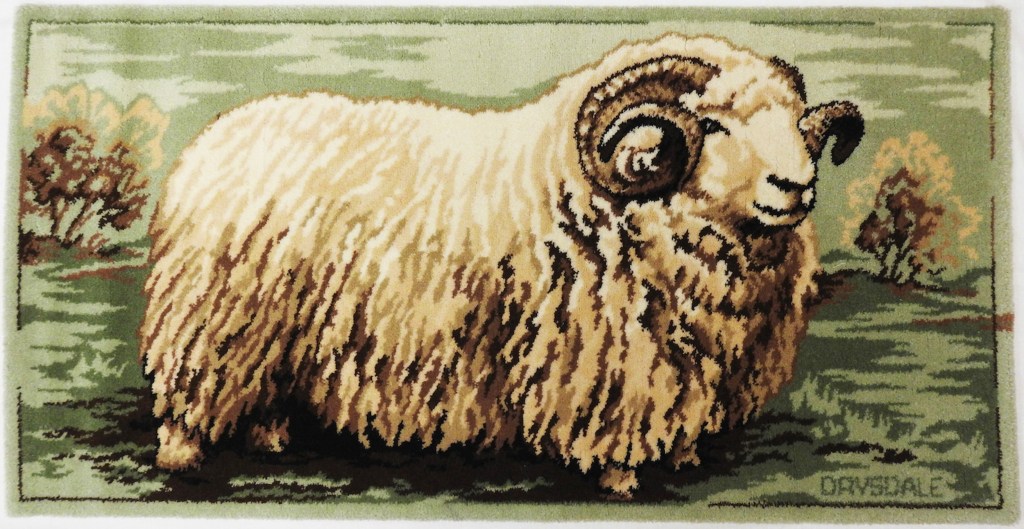
One such object is a small woollen picture rug depicting a Drysdale ram. Examples are held by both the Massey University Archives and Te Manawa Museum.1 At first glance, the rug appears to be simply a decorative item. On closer inspection, however, one sees its story closely tied to the agricultural, scientific and economic history of New Zealand.
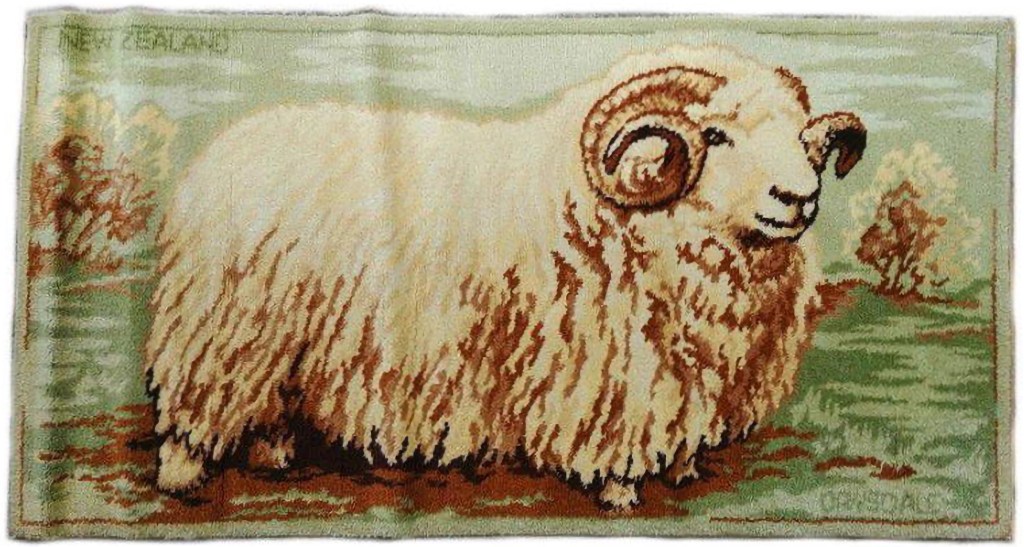
The rug features a Drysdale ram standing in a pastoral landscape. The long shaggy fleece and impressive curled horns dominate the composition. The Massey Archives rug contains the word ‘Drysdale’, whereas the Te Manawa rug is accompanied by the words ‘New Zealand’ and ‘Drysdale’. The image is striking and was created for more than decoration. It was intended to promote a uniquely New Zealand sheep breed and the distinctive wool that breed produced.
A New Breed for a New Purpose
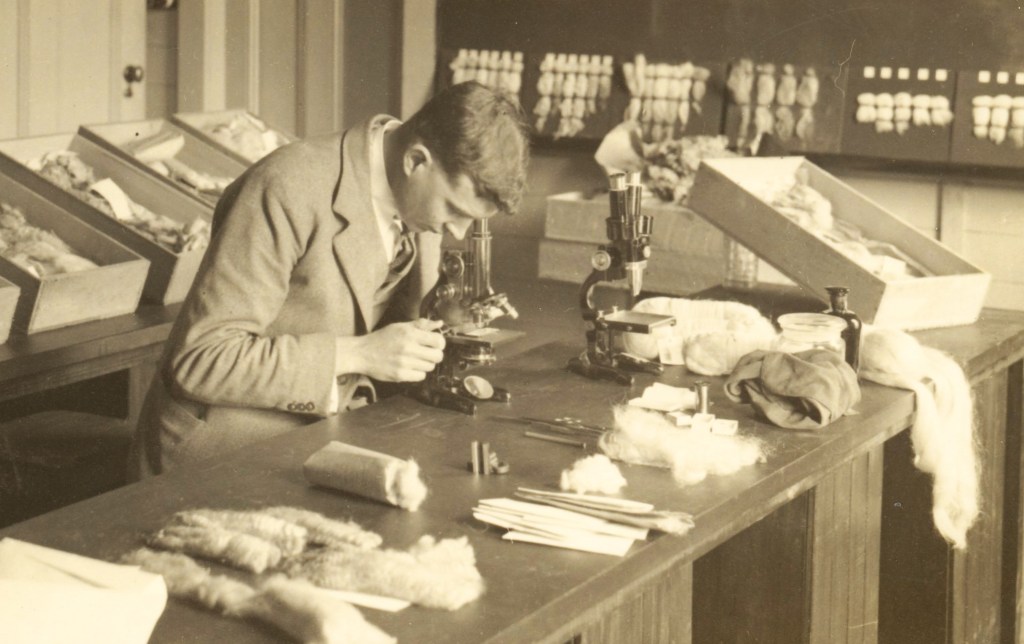
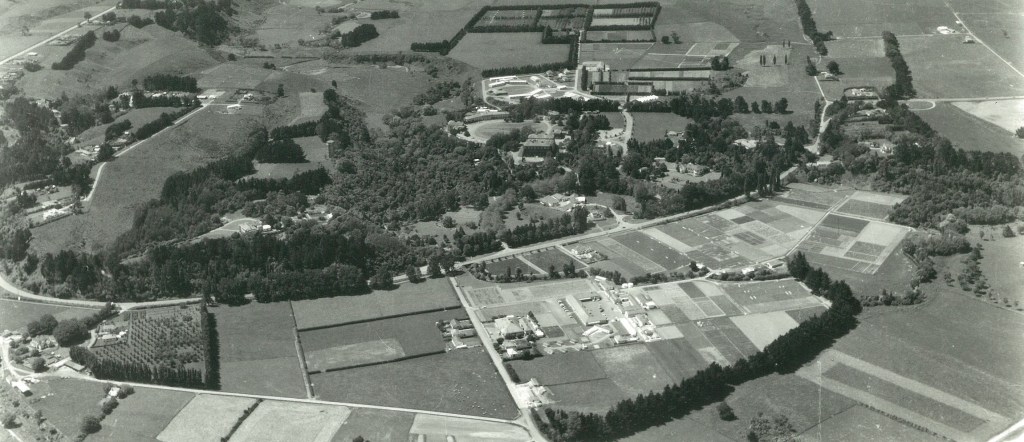
The rug’s story begins at Massey Agricultural College in Palmerston North, where zoologist Dr William Francis ‘Francis’ Dry (1891–1979) devoted much of his career to sheep breeding and wool research.2
During the early twentieth century, New Zealand’s sheep industry was largely focused on producing finer wool for clothing and textiles. Dr Dry recognised that there was also potential value in coarser, stronger wool suitable for carpets and upholstery. Drawing on naturally occurring genetic characteristics found in certain sheep, Dry began a breeding programme at the college aimed at producing animals with exceptionally coarse and durable wool. The breeding programme began with a ram named ‘Pa Nielsen’, donated in 1931 by local farmer, N. P. Nielsen. The ram’s unusually hairy coat became the foundation of the new breed.3
After many years of careful selection, the result was a unique new breed. Named the Drysdale in honour of Francis Dry, the sheep produced a strong, resilient fibre ideally suited to carpet manufacture. Efforts to commercialise the wool started in the 1960s when Massey, a British carpet manufacturer and several farmers established the Carpet Wool Development Company to develop new markets for this specialised product. Strong and capable of taking vivid dyes, the wool offered qualities particularly suited to floor coverings and furnishings. In time, the breed gained national and international recognition, becoming one of New Zealand’s most notable contributions to sheep breeding.4
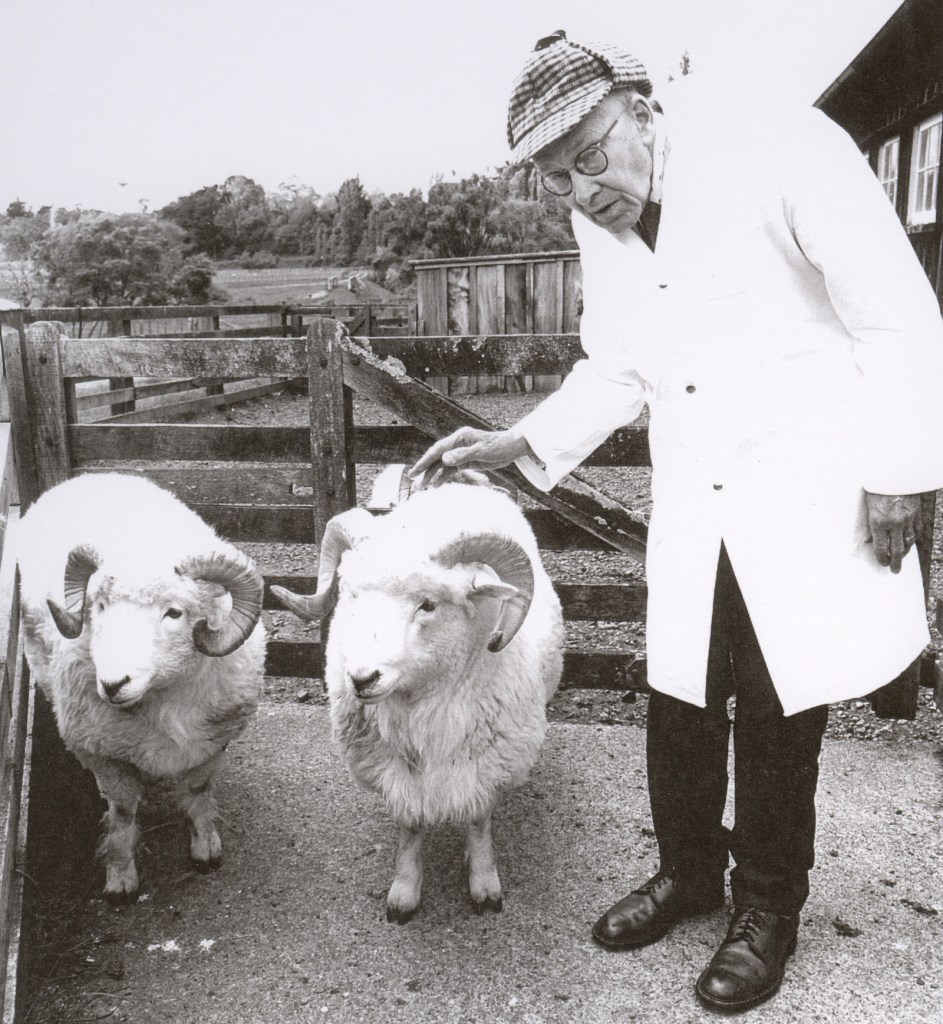
Photographs preserved by the Massey Archives show Francis Dry among the sheep he developed, highlighting the close relationship between scientific research and practical farming that characterised much of Massey’s early agricultural work.
Promoting Wool Through Design
The rug itself emerged from efforts to market Drysdale wool and the industries that depended upon it. Rather than advertising a particular carpet, the design promoted the source of the wool itself. In effect, the sheep became the brand.
The characteristic appearance of the Drysdale ram made it instantly recognisable, while the rug provided a tangible demonstration of the wool’s qualities. Potential buyers could see and feel the product while also being reminded of its agricultural origins.
The rug was presumably produced for organisations associated with these promotional efforts, including the Drysdale Carpet Wool Co-operative Company (later called the New Zealand Drysdale Wool Company Limited), which was established in 1975. Like many agricultural co-operatives of the period, the organisation sought to help farmers market their products collectively, build demand and strengthen the position of natural wool in increasingly competitive markets.5
The rug functioned as both decoration and advertisement. Displayed in homes, offices, conference venues, showrooms or agricultural events, it carried a simple message: this wool came from a uniquely New Zealand breed developed through local research and farming expertise.
Wool in a Time of Change
The later decades of the twentieth century were challenging for wool producers around the world.
Synthetic fibres and cheaper imported fibres increasingly competed with New Zealand wool products, forcing growers and manufacturers to identify new markets and highlight their wool’s distinctive advantages. Specialised wool types such as Drysdale fleece represented one response to these changing conditions.
Industry groups promoted the strength, durability, and environmental qualities of natural wool while encouraging manufacturers to develop premium carpet products. The Drysdale rug can be understood within this wider effort. It was a promotional object, but it was also part of a much larger conversation about the future of New Zealand agriculture and manufacturing.
In this sense, the rug reflects an era when innovation occurred not only in laboratories and on farms but also in marketing campaigns and industry advocacy.
The latter half of the twentieth century saw the heyday of the Drysdale breed. At its peak, there were about 600,000 Drysdale sheep in New Zealand.6 Following the decline in demand for Drysdale fleeces, the number of sheep in the country steadily dropped. By 2022 there were no registered flocks left in New Zealand and just one in Australia.7
A Manawatū Connection
The rug has a strong regional story. According to Te Manawa’s records, its example was presented to Palmerston North Mayor Paul Rieger following a Drysdale sheep breeders’ conference held in Palmerston North in 1987.8 The rug subsequently remained within Palmerston North City Council ownership before entering the museum collection.
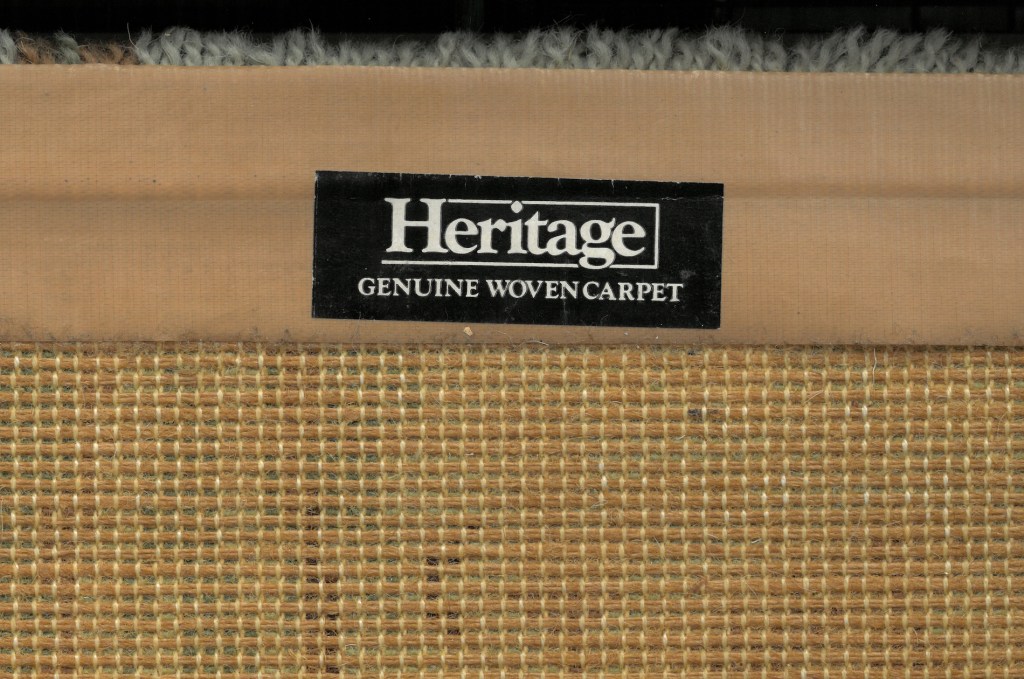
There is also evidence suggesting that the rugs may have been manufactured by Feltex at Foxton, potentially making them part of the region’s manufacturing heritage.9 While this attribution has yet to be confirmed, the theory is plausible. Feltex became well known during the 1960s and 1970s for its pictorial New Zealand-themed rugs depicting landscapes, landmarks and cultural motifs. The Drysdale rug is similar in both style and scale to many of these products.10
Collecting the Everyday
Perhaps the most intriguing aspect of the Drysdale rug is its survival. Objects like this were created to be used. They were displayed, handled, walked on, transported to conferences, and occasionally hung on walls. Many would have faded, worn out, or simply been discarded once their promotional purpose had passed.
For that reason, surviving examples are becoming rare. In recent years, collectors have shown growing interest in vintage New Zealand pictorial rugs, recognising them as notable examples of local design and manufacturing.11 Objects once regarded as ordinary are increasingly appreciated as windows into New Zealand’s cultural and economic history.
More Than a Decorative Rug
Today, the Drysdale rug is more than a decorative item. It is a reminder of Francis Dry’s work at Massey Agricultural College, the value of wool to New Zealand’s economy, and the efforts of farmers and co-operatives to find new markets for their products. It also speaks to the role of Manawatū in both agricultural research and manufacturing, preserving the story of an industry that once shaped communities throughout the region.
Importantly, it shows us that museum collections are filled with objects whose significance reaches beyond their original purpose.
Footnotes
- The Massey Archives rug measures 1355 x 695 mm, see ‘Drysdale rug, circa 1970s to 1980s’, Tāmiro, Massey University Archives, O-1.7, URL: https://tamiro.massey.ac.nz/nodes/view/5111 (accessed 7 August 2026). Te Manawa’s example is an almost identical size, see ‘Rug c.1980s. Small with Drysdale sheep image’, donated by Palmerston North City Council, Te Manawa Museums Trust, 99/22/1, URL: https://collection.temanawa.co.nz/objects/29119/feltex (accessed 7 August 2026). ↩︎
- Dry, The Architecture of Lambs’ Coats, p. 1. ↩︎
- Dry, The Architecture of Lambs’ Coats, pp. x, 46; Brooking, Massey, p. 87. ↩︎
- Marsden, Courtney and Bartleet, Floreat Agricultura, pp. 22, 45; Stringleman and Peden, ‘Sheep farming – New Zealand sheep breeds’, Te Ara – the Encyclopedia of New Zealand. ↩︎
- Simpson, An Assessment of Farming Co-operatives in New Zealand, p. 8. ↩︎
- ‘Sheep: Drysdale’, Rare Breeds Trust of Australia. ↩︎
- ‘Sheep: Drysdale’, Rare Breeds Trust of Australia; ‘Drysdale: Beersheba Drysdales (Flock 255, est. 2002)’, Beersheba Farm. ↩︎
- ‘Rug c.1980s. Small with Drysdale sheep image’, Te Manawa Museums Trust, 99/22/1; Press, 16 July 1987, p. 12. ↩︎
- The New Zealand Woolpack and Textiles plant at Foxton was purchased by Stevens Bremner Carpets Ltd in 1973 and Feltex subsequently purchased a 50 per cent shareholding of Stevens Bremner in 1980. The Feltex plant closed in 2008. See Scheele, ‘Matting Samples’; Press, 20 June 1973, p. 22; Press, 10 April 1976, p. 18; Press, 12 September 1980, p. 12. ↩︎
- The following examples are held in public collections: ‘Rug [Queenstown]’, Feltex Carpets New Zealand Ltd, manufactured in Riccarton, designed by Brendan Hartwell, purchased in 2005, Te Papa Tongarewa Museum of New Zealand, GH015186, URL: https://collections.tepapa.govt.nz/object/696990 (accessed 7 August 2026); ‘Rug, “Taupo”’, Feltex Carpets New Zealand Ltd, manufactured in Riccarton, designed by Brendan Hartwell, purchased in 2010, Te Papa Tongarewa Museum of New Zealand, GH017024, URL: https://collections.tepapa.govt.nz/object/1106726 (accessed 15 August 2026); ‘Rug, wool [“Mt Cook”/Aoraki]’, 2003.146.1, Canterbury Museum, URL: https://collection.canterburymuseum.com/objects/216647/rug-wool (accessed 15 August 2026); ‘Carpet [Auckland Harbour Bridge]’, purchased in 2000, Auckland Museum, 2000.8.1, URL: https://www.aucklandmuseum.com/discover/collections/record/64982 (accessed 15 August 2026); ‘Rug, floor [“Mt Egmont”/Taranaki], Puke Ariki, PA 2005.271, URL: https://collection.pukeariki.com/objects/38095/rug-floor (accessed 15 August 2026). ↩︎
- ‘Feltex Ltd., 1970s New Zealand theme picture rugs’, Carter’s Price Guide to Antiques. ↩︎
Bibliography
Brooking, T. W. H., Massey. Its early years, Massey Alumni Association, Palmerston North, 1977.
Dry, F. W., The Architecture of Lambs’ Coats. A speculative study, Massey University, Palmerston North, 1975.
‘Drysdale: Beersheba Drysdales (Flock 255, est. 2002)’, Beersheba Farm, URL: https://www.beershebafarm.com/sheep/drysdale/ (accessed 10 August 2026).
‘Drysdale Sheep: A minority breed of New Zealand origin’, New Zealand Rare Breeds, 2018, URL: https://www.rarebreeds.co.nz/drysdale.html (accessed 31 July 2026).
‘Feltex Ltd., 1970s New Zealand theme picture rugs’, Carter’s Price Guide to Antiques, URL: https://www.carters.com.au/index.cfm/index/2698-feltex-new-zealand-rugs-and-carpets/ (accessed 15 August 2026).
‘Foxton residents farewell Feltex factory’, Radio New Zealand, 2008, URL: https://www.rnz.co.nz/news/regions/28106/foxton-residents-farwell-feltex-factory (accessed 15 August 2026).
Marsden, Lucy, Lesley Courtney and Michael Bartleet, Floreat Agricultura. A history of agriculture and horticulture at Massey University, Massey Agriculture, Palmerston North, 2002.
Scheele, Sue, ‘Matting Samples’, Object Histories from Manawatū, URL: https://temanawamuseumsociety.org/2024/08/21/matting-samples/ (accessed 15 August 2026).
‘Sheep: Drysdale’, Rare Breeds Trust of Australia, URL: https://rarebreedstrust.com.au/public/pages/ss-drysdale (accessed 7 August 2026).
Simpson, D. B., An Assessment of Farming Co-operatives in New Zealand, 1982, URL: https://ruralleaders.co.nz/wp-content/uploads/2026/01/Kellogg_Rural_Leadership_Programme_NZ_Don_Simpson_1982.pdf (accessed 7 August 2026).
Stringleman, Hugh and Robert Peden, ‘Sheep farming – New Zealand sheep breeds’, Te Ara – the Encyclopedia of New Zealand, https://teara.govt.nz/en/sheep-farming/page-6 (accessed 10 August 2026).


Leave a Reply